
Spread Arbitrage: How I Capture Market Inefficiencies
People keep DMing me the same thing: "Artemon, explain properly how you catch spreads." Answering everyone ten times over is a chore, so I put everything into one piece.
No theory for theory's sake here. Just what I use every day, my real trades with numbers (including the ones where I earned pennies, and why), and a breakdown of the tool I built for my own needs.
Let's go.
Part 1. What a spread is and where it comes from
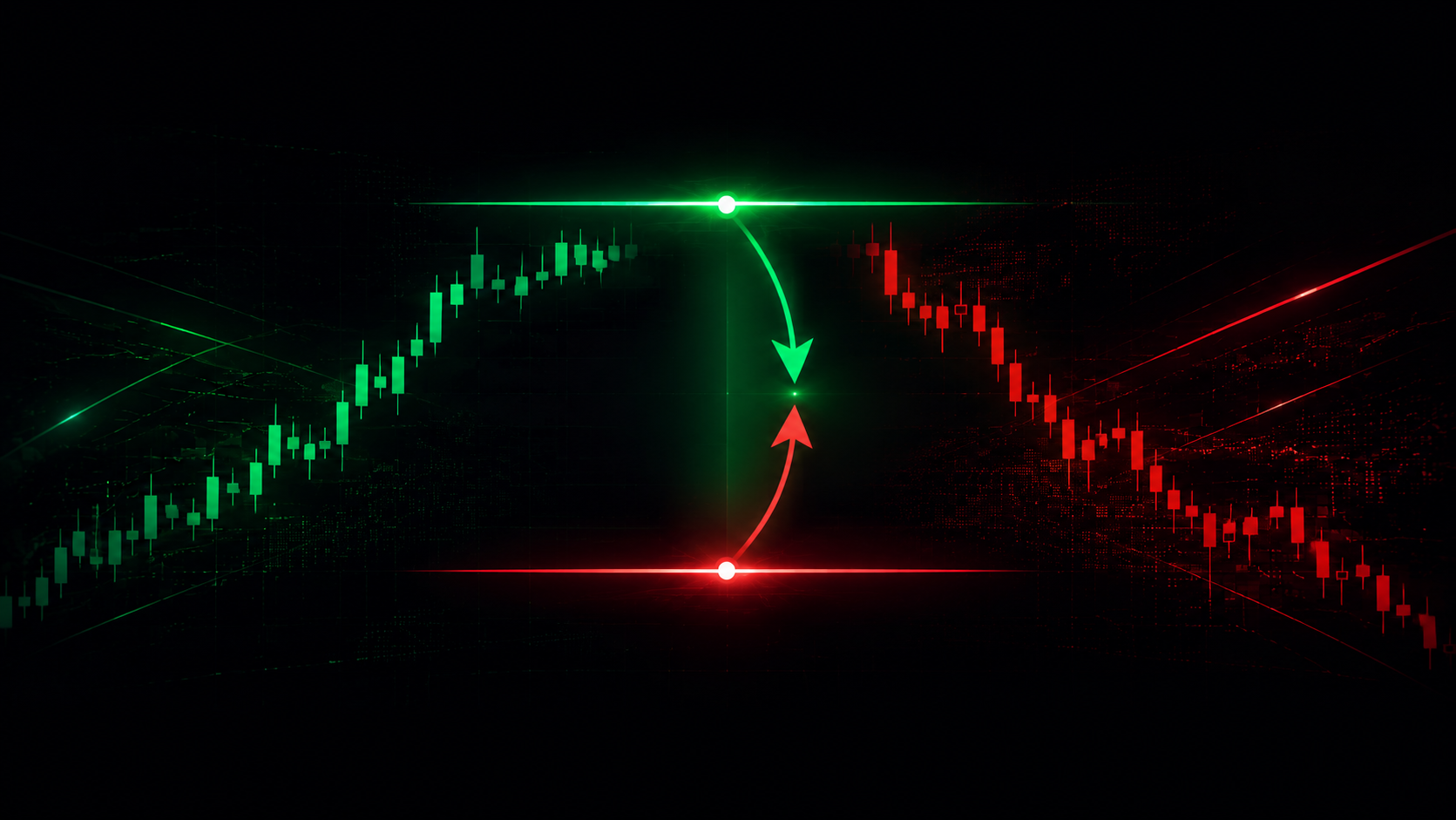
A spread is the price difference of the same asset on different venues.
Say HOME trades at $0.0200 on MEXC and $0.0204 on Binance. That's about a 2% difference. Those 2% are exactly what we're hunting.
The idea of arbitrage is simple. Markets seek equilibrium. If the same token has different prices in two places, sooner or later they converge. Our job is to take both sides in advance and collect the difference when everything evens out.
Where inefficiency comes from
A spread doesn't appear out of thin air. It always has a cause, and understanding the cause matters more than seeing the percentage itself.
Different liquidity. On a top exchange the order book is thick; on a small one it's thin. One large order on a small venue moves the price 5%, while on Binance nobody would even notice.
An isolated market. A token is listed on one exchange but missing on another, or deposits and withdrawals are closed. Arbitrageurs physically can't move the coin over and level the price.
Unlocks. Everyone sees the unlock schedule. People stack shorts in advance, and on the less liquid venue the price gets pushed down harder than on the main one.
Listings and delistings. A new pair always trades chaotically in its first hours. Hence the pumps, the dumps, and the fat divergences.
Index price. This one is underrated. An exchange prices a perp not on its own but from a basket of other venues. For example, 30% Binance, 30% OKX, 20% Gate, 20% DEX. If the price gets dumped on one of the source exchanges, the index follows, and a spread appears where logically it shouldn't exist.
In the coin card in ArtemonTools I built a dedicated section that shows which exchanges the perp index is built from and with what weights. Without it you're guessing; with it you understand where the price will go next.
Technical outages, hacks, network issues. Rare, but this is exactly where the fattest numbers appear.
Part 2. Types of spreads

Futures vs futures
The most practical and safest combo. Long on the exchange where it's cheaper, short where it's more expensive. The position is fully hedged, so you barely care where the market goes — you're only waiting for convergence.
Pros: nothing needs to be transferred anywhere, entry and exit take seconds. Cons: percentages here are usually modest, around 1% to 5%.
Spot vs futures
You buy spot where it's cheaper and short the future where it's pricier. Here you absolutely must watch funding. If it's negative and large, it will bite chunks off your profit every few hours.
Futures vs DEX and spot vs DEX
Divergence between a centralized exchange and a decentralized one (Hyperliquid, Aster, Lighter and others). The percentages can be the tastiest, but you add gas, slippage and transaction time.
My 龙虾 case is exactly from here: Gate spot vs Aster futures, +4.14% spread.
Funding farming
A separate mechanic I also run actively. You don't wait for price convergence. You open a hedged position (long where funding pays you, short where you pay but less) and simply collect payouts every 1 to 8 hours.
The profit isn't explosive, but it's predictable. More on that below, in the cases.
Part 3. The main thing to understand about percentages
This is where beginners lose money most often.
Seeing a 5% spread does not mean you'll earn 5%.
From that number you must subtract:
- entry fees on both legs, roughly 0.04 to 0.1%
- exit fees, the same again
- funding for the whole holding period, from zero to several percent
- slippage on entry, depends on the order book
- slippage on exit, usually bigger than on entry
- gas and network fees for DEX combos
- the coin withdrawal fee
And the nastiest part: the spread may not converge — it may widen further. Then one leg bleeds faster than the other gains, and with high leverage you catch a liquidation before the logic plays out.
A real example of why the percentage is deceptive
My SKHYNIX/SKHY case. Started entering from 10%. The spread went against me; I averaged in up to 34%. Eventually exited near 20%.
The profit was $50.
Twenty percent of spread. Fifty dollars. Because half the capital had to sit in averaging, the money idled in the position for a long time, funding dripped against me, and exiting at the perfect price on an illiquid pair is physically impossible.
The takeaway I drew: I don't touch spreads like that anymore. A fat percentage on a screenshot is not fat money in your pocket. If the coin is illiquid and the spread keeps widening, it's not a gift — it's a trap.
Part 4. How to enter: in dollars or in tokens
A subtle point that changes the whole profile of the trade. The same spread can be entered two ways, with different outcomes.
Say token X. On exchange A it costs $12, on exchange B $10. The spread is about 16.7%. Capital of $12,000 on each side.
Option 1: equal dollar amounts
Short on A for $12,000 — that's 1,000 tokens. Long on B for $12,000 — that's 1,200 tokens.
You're holding an extra 200 tokens. That is your profit. But its dollar value depends on where the spread converges. Converges at $11 — you get $2,200. Converges at $1 — you get $200.
The key point: market direction barely matters to you; only the convergence itself does. This is the classic hedge.
Option 2: equal token amounts
Short 1,000 tokens on A ($12,000). Long 1,000 tokens on B ($10,000).
Here you lock in the $2 difference per token. And now direction becomes critical.
The token doubles: A is $24, B is $20. Same percentage, but the absolute gap grew to $4. You're down $2,000.
The token halves: A is $6, B is $5. The gap shrank to $1. You're up $1,000.
Simple logic. Expecting growth — enter with equal dollar amounts. Expecting a drop — equal token amounts pay more.
Most arbitrageurs use the first method, and for a start that's right. But you must know the second mechanic, or one day you won't understand why your PnL slides into the red while the spread is converging.
Part 5. My live cases
No theory — just what happened and what it paid.
龙虾, Gate spot vs Aster futures, +4.14%
A classic CEX-to-DEX combo. The spread held long enough to enter both legs calmly. Posted the signal in the channel, entered myself.
Result: +$100.
HOME, MEXC futures vs Binance futures, about 2%
A boring, flat, healthy spread. Deposits and withdrawals open on both sides — the first thing I checked. Entered near 2%, waited for convergence, exited.
Result: +$40.
These are the trades that make up the core of the income. Not moonshots on inefficiencies but steady 1 to 4%, regularly and without nerves.
BANK, funding farming Binance/BingX
Hedged up and sat collecting funding. The first day dripped nicely, then the rate slid down and payouts got smaller. As soon as the yield stopped justifying the locked capital, I left.
Result: $60 over a couple of days at zero directional risk.
The moral: funding farming is not "set and forget." The rate changes and you have to watch it. That's why I added a per-exchange funding-rate alert to ArtemonTools, so I don't check by hand every three hours.
DEXE, Binance/Bybit, spread about 6%
A showcase of discipline. The spread hung near 6%; my hands were itching. But funding between the venues differed and worked against me, meaning part of the profit would burn right during the hold.
I didn't jump in. I set an alert and waited for funding to even out.
Waiting is also an action. Half of the good trades in arbitrage start with you not entering right away.
Part 6. The risks that actually kill deposits
Let's be honest, no fairy tales about easy money.
Spread divergence. You entered at 5% and it drove to 15%. One leg is bleeding. With a big size you either top up margin or cut at a loss.
Liquidation before convergence. The main killer. The spread can be mathematically right, but if you got liquidated along the way, you no longer participate in the right outcome. Leverage in arbitrage is not a yield booster — it's a countdown to liquidation.
Closed deposits and withdrawals. See a coin cheaper on exchange A? Check whether you can withdraw it from there. If the network is closed, the spread can hang for weeks — and you with it.
Funding. Especially on MEXC and small exchanges, where it can be hourly and very nasty. In a day it can eat the entire expected profit.
Slippage. On paper the spread is 8%. In reality your order eats through the book and the real entry lands at 5%.
How I close off these risks
- I keep leverage low — a hedge is about preservation, not multipliers
- I check deposits and withdrawals before entering, not after
- I look at book depth and estimate whether my size fits without slippage
- I set a price alert near my liquidation, to learn about a problem before the exchange tells me
- my capital is split across several venues; I never keep everything in one place
- I log my trades, and if a trade earned $50 on a 20% spread, that's a signal to fix the strategy, not to repeat it
Part 7. Infrastructure — arbitrage doesn't work without it

A spread lives for minutes. Sometimes seconds. If you're going through exchange verification at that moment, you're already late.
What must be ready in advance.
Accounts on every venue you need. CEX: Binance, Bybit, MEXC, Gate, OKX, BingX, Bitget, Phemex, Bitunix, Ourbit. Perps and DEX: Hyperliquid, Aster, Lighter, Okx Dex, GMGN. Verification passed, 2FA set up.
Liquidity distributed. Keeping all capital on one exchange is pointless. A comfortable amount should sit on every venue you work on. Otherwise you'll lose half the spread while making a transfer.
Fast login. Passkeys and Face ID instead of passwords. A dedicated browser tab group with all exchanges that unfolds in one click.
Mobile setup. On the phone a mobile browser is enough: keep tabs for all DEXes open and enter a trade from anywhere. A desktop is comfier, but the spread won't wait for you to reach your desk.
ArtemonTools with alerts always at hand. That's what it was built for.
Part 8. Pre-trade checklist

I run it every time. Takes 30 seconds, saves much more.
- Is the spread real, or a phantom from an illiquid order book?
- Are deposits and withdrawals open on both sides? On which networks?
- What's the funding on both venues and when is the next payout?
- Will my size fit without heavy slippage?
- Is there a position size limit on this pair?
- How much will entry and exit fees cost?
- What's my leverage and where is my liquidation price? Alert set?
- What do I do if the spread doubles against me? The answer must exist before entry.
- Do I understand the cause of the spread? If not, why do I even think it will converge?
If even one item has no answer, I don't enter. A skipped spread costs zero. A spread entered blindly costs far more.
Bottom line

Arbitrage is not about catching one 30% spread and retiring. My SKHYNIX case shows it perfectly: 20% of spread and $50 of profit.
It's about systematically collecting 1 to 4% of turnover without taking directional risk, and doing it often. HOME for $40, 龙虾 for $100, BANK funding for $60. Individually boring numbers. Summed over a month, it's decent money at near-zero market risk.
What to do if you're just starting.
Don't trade at all for the first week. Open ArtemonTools and just watch. Observe which spreads appear, how often, and how fast they converge. Screen time beats capital here.
Start with futures vs futures on liquid pairs. The simplest and most predictable mechanic.
Make your first trades with minimal size. The goal isn't to earn — it's to walk the full cycle with your own hands and see where the percentages actually leak.
Keep statistics. Entry spread, exit spread, fees, funding, result. In a month you'll see for yourself which combos work for you and which just burn time.
Useful links
🟢 Spread-hunting ArtemonTools: ArtemonTools, completely free
🟢 My Twitter: @imartemon — I post spread signals, cases and more there too
🟢 Questions and ArtemonTools ideas: @imartemon
If you have ideas for an ArtemonTools feature, DM me. Half of what's in ArtemonTools today came straight from subscriber suggestions.
Everything above is my personal experience, not financial advice. Arbitrage carries a risk of losing capital: spread divergence, liquidations, exchange restrictions. Do your own risk math and never trade money you're not prepared to lose.